

Dear tourists, there are no private beaches in Croatia
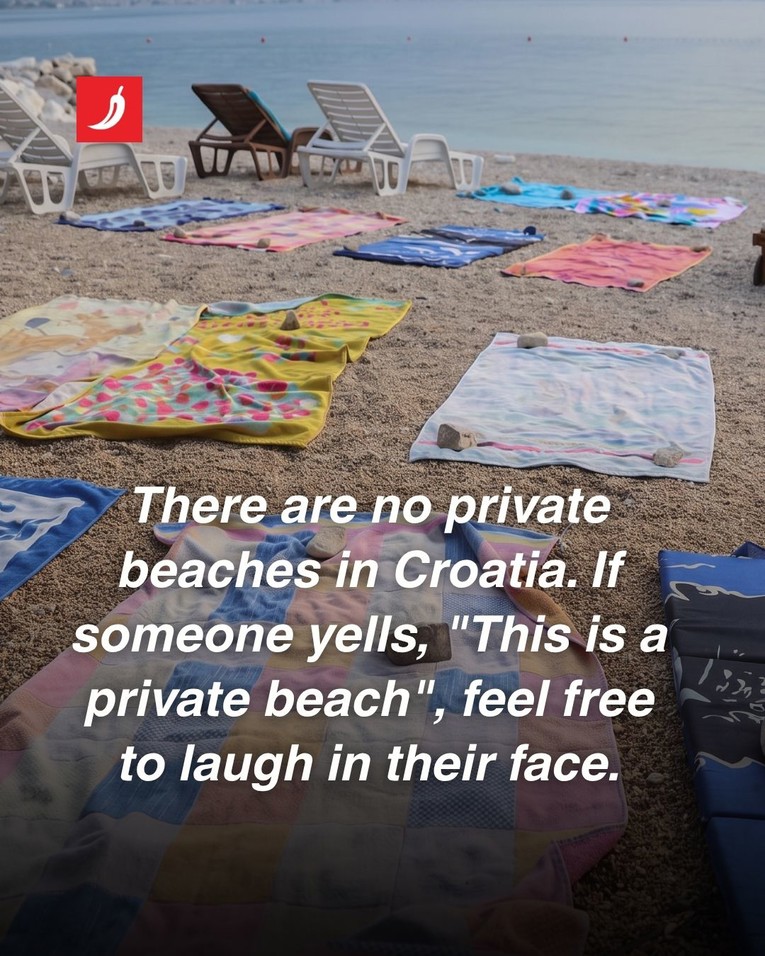
Turistima u Hrvatskoj poručujemo da se mogu kupati na gotovo svim plažama jer privatne plaže, u pravilu, ne postoje. Kako bi ta informacija stigla do što većeg broja ljudi, tekst smo preveli na više stranih jezika.
*Hrvatska verzija članka
DEAR tourists, if you're in Croatia this summer and someone tells you a beach is "private," the basic rule is simple: on almost all Croatian beaches you're allowed to swim, sunbathe, and lay out your towel - even if the beach is in front of a hotel, campsite, apartment complex, or private villa.
The sea and the seashore don't belong to anyone privately - they're meant to be used by everyone. The owner of a seaside house doesn't own the beach in front of his property, and a hotel doesn't become the owner of a beach just because it happens to sit in front of it.
Signs like "private beach," "reserved for guests," or "no entry" don't automatically mean you're not allowed in. If it's a beach that's part of the maritime domain, you're free to be there. A hotel, restaurant, or concession holder can charge for sunbeds, umbrellas, drinks, food, or other services - but they can't charge you just for showing up on the beach or going into the sea.
In other words, you don't need to rent a sunbed, order a drink, or be a hotel guest to swim there - you're free to bring your own towel, food, drinks, and a cooler.
Restricting or banning access to the coast
There are, of course, reasons why access to the coast can and sometimes must be restricted, and occasionally banned outright. You can't enter a military port, a shipyard, or another special-purpose port.
Access to public ports varies - some passenger and pedestrian areas may be open to visitors, but swimming, sunbathing, and free movement are often restricted for safety, customs, and operational reasons. Follow posted signage and staff instructions.
Under the 2023 law, sea beaches must remain open to everyone. They can't be fenced off, no entry fee can be charged, and they can't be taken out of general public use. A concession can still be granted for commercial use of a beach, but it doesn't give the concession holder the right to turn the beach into a private space, a space for guests only, or one for "invited" people only.
There are two strict exceptions. The first are beaches meant for users of public health institutions who are there for treatment or rehabilitation, and the second are nudist beaches, or, as the law puts it, beaches whose users are "naturist tourists." These beaches can be excluded from general use.
All other beaches must remain free
All other beaches in this country are free for you - the ones in front of hotels, the ones in front of campsites, and the ones in front of private houses. No one can block your way and shout "That's mine!", "That's my family's land!", "We built that pier!" The law doesn't recognize such arguments, even if someone keeps repeating "it's always been this way," going back to the days of Justinian.
You can come, spread out your towel, swim, sunbathe, launch a boat, or row off further. The maritime domain serves everyone and is used the way the sea and coast have always been used. That said, you also can't spread your towel out and leave it there overnight to "save" your spot for the next morning.
Permits for commercial activity don't give the right to claim a beach
And what about the people selling ice cream on the beach, or renting out sunbeds, umbrellas, pedal boats, or other summer gadgets? They got a permit to rent out sunbeds - not a beach. They can have one small area where the sunbeds and umbrellas are neatly stacked when no one's using them. When a guest wants a sunbed or umbrella, they can rent it and set it up somewhere it won't bother others. Once they're done using it, it goes back on the pile.
They can't scatter empty sunbeds across the whole beach at six in the morning, plant umbrellas in every free spot, and "reserve" the beach that way. You're free to ignore such empty sunbeds. If someone bothers you, chases you off, or moves you because of this, call the police or the local/maritime wardens.
Similarly, if someone's selling ice cream on the beach, they can't demand that you not bring your own. If they're selling drinks, they can't ban your cooler. If someone's selling food by the sea, you don't have to be their customer to be on the beach. The beach belongs to you just as much as it belongs to them. They have the right to offer their goods and services. You have the right to buy nothing.
The same goes for anyone operating under a concession. A concession isn't the right to turn a beach into a closed-off hospitality venue - it's the right to carry out a specific, defined activity there. In other words: a concession holder can sell ice cream, drinks, and lunch. They can't sell the right to simply be on the beach. You can buy ice cream and sandwiches - or bring your own.
And finally
To sum up once more: the coast belongs to everyone, but you still need to reach it by a public route or by sea. Private land behind the beach remains private land. The right to access the coast doesn't mean the right to walk through someone's yard or garden. The sea and the shore belong to all of us. Someone else's property does not.
Enjoy the Adriatic beaches. They're free for everyone. And don't let anyone stop you.
***
> Dragi turisti, na Hrvaškem ni zasebnih plaž. Kopate se lahko, kjer želite
> Cari turisti, in Croazia non esistono spiagge private
> Kedves turisták, Horvátországban nincsenek magánstrandok. Ott fürödhetnek, ahol csak
> Drodzy turyści, w Chorwacji nie ma prywatnych plaż. Możecie kąpać się, gdzie chcecie
> Milí turisté, v Chorvatsku neexistují soukromé pláže. Koupat se můžete, kde chcete
> Touristen, das sollten Sie wissen: In Kroatien gibt es keine Privatstrände
> Touristes, en Croatie, aucune plage n’est privée: baignez-vous où vous voulez
> Dragi turisti, u Hrvatskoj nema privatnih plaža. Možete se kupati gdje želite


